
Active NZ Survey 2025/26
Active NZ Survey 2025/26
What helps young people be active

Active NZ is our nationwide survey of how New Zealanders aged 5 and over are active. The 2025/26 findings show that young people want to be more active, but they need the right support.
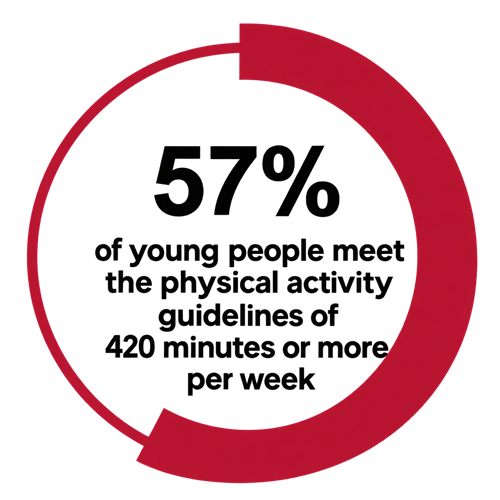 Young people’s choices are shaped by the people around them, the opportunities they can reach and afford, and whether activities work for their lives.
This year’s findings highlight 4 things that can help:
|
|
|
|
|
|
|
|


The findings are based on survey responses collected between 1 July 2025 and 30 June 2026. This year’s report focuses mainly on tamariki aged 5 to 11 and rangatahi aged 12 to 17.
Rangatahi are choosing different ways to be active
Young people are active in many ways. Many participate in organised sport and informal activities, rather than choosing one or the other.
As they get older, more rangatahi are choosing activities that give them control over when, where and how they are active. Independent, self-directed exercise is becoming more common, alongside a continued rise in gym membership among older rangatahi.
How do we know?
83% of young people take part in informal activity.
46% of rangatahi participate in independent, self-directed exercise.
32% of 15 to 17-year-olds have a gym membership, up from 23% in 2017.
What can help
Keep organised opportunities available while giving rangatahi more choice in when, where and how they get active.
Active whānau make a difference
What happens at home affects how active young people are.
Young people living with active adults are more likely to be active themselves. Adults at home can influence the activities young people try, the clubs they join and the opportunities they take part in.
How do we know?
70% of young people living with a very active adult meet the physical activity guidelines.
Among young people living with an inactive adult, this falls to 47%.
What can help
Make it easier for whānau to be active together. Think about cost, transport and timing, and make it easy for families to find out what is available nearby.
Young people need different support as they grow up
What gets in the way of being active changes as young people get older.
Finding the time is a challenge for both tamariki and rangatahi. For tamariki, cost and getting to activities are more likely to get in the way.
For rangatahi, interest and motivation become much bigger barriers. Feeling too tired, struggling with motivation, not feeling fit enough and preferring to do other things can all make being active harder.
How do we know?
Around 1 in 2 tamariki and rangatahi report barriers related to time pressures.
53% of tamariki report at least one barrier related to things like cost and getting to activities.
45% of rangatahi report barriers related to interest and motivation.
What can help
Make activities for tamariki affordable, nearby and easier to fit into family life. For rangatahi, offer flexible options, trusted information and support that helps them feel confident taking part.
Wanting to be active is not always enough
Not every young person has the same opportunities to be active.
Some have fewer chances to join clubs, use outdoor spaces or connect with people and places that support them to be active. But lower participation does not mean lower interest. Many of the young people with the fewest opportunities still want to do more physical activity.
How do we know?
For rangatahi experiencing 3 or more inequities, 37% meet the physical activity guidelines, compared with 64% of those experiencing none.
Yet 79% of this group want to do more physical activity.
What can help
Work with young people and their communities to understand what is getting in the way of them being active. Then focus on improving access to the people, places, clubs and affordable opportunities that help them be active.
Use the findings
There’s no one way to be active. From organised sport to play and exercising independently, different options work for young people.
The findings show why it’s important to provide different opportunities that work for young people at different ages and in different circumstances.
The Active NZ findings can help you understand how participation is changing and what young people may need from the opportunities around them.


The Active NZ Survey was updated in 2024/25. Read about the changes and other frequently asked questions about the survey.


