Te Pā o Rakaihautu
Te Pā o Rakaihautu

Whole school commitment to taiao-based learning strengthens engagement.
- Up to 70% of learning time in te taiao
- Kura-wide curriculum integration
- Improved engagement, behaviour and physical activity
Since engaging with Mātaiao 5 years ago, tauira at Te Pā o Rakaihautu in Ōtautahi now spend up to 70% of their school day outside the traditional walls of the classroom. The pā whānanga (learning village) in Te Waipounamu also now has a practitioner experienced in Mātaiao on staff. They are helping to lead development both within the kura and across others in Te Waipounamu.
The changes reflect the commitment of senior leadership at the kura-a-iwi, who have seen first-hand the value of outdoor education to reconnect whānau with place, people, and Papatūānuku (mother earth).
Evaluation has shown that pononga are now spending more time learning outside the classroom and being more physically active, enjoying learning mātauranga taiao in the taiao, and positively engaging in school – with positive changes in behaviour, especially among those who may have been considered difficult to engage in learning.
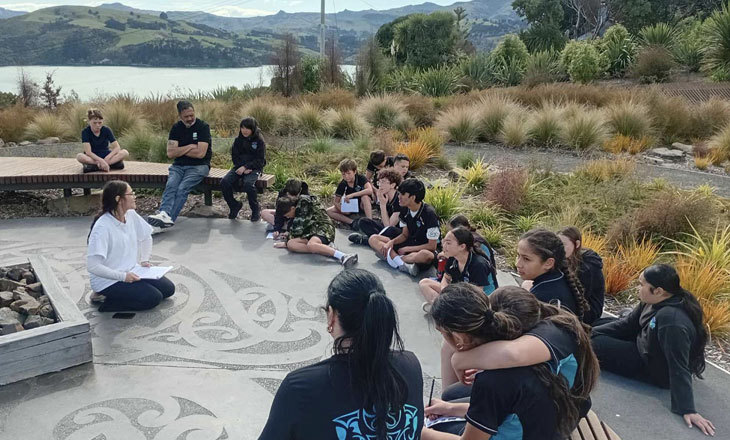
Within the junior school, the kura is well advanced in integrating kaupapa ako, tikanga (karakia), pūtaiao, taiao-based activities and reo matatini into their planning.
Through Active As funding, the kura is also progressing in applying Mātaiao to the delivery of their senior curriculum. This includes contextually relevant learning in taiao, and the use of kaupapa to integrate subject-specific achievement standards and learning outcomes.
One kaiako says, with the support of the Mātaiao practitioner, he has shifted his practice. “I’ve definitely changed my approach to planning my units by making my outcomes almost like project or experience based,” he said.
“Last year I did the adrenaline forest and we did the high ropes. This year we devised strategies to walk the Rāpaki track which is uphill and it’s in our real taiao. We whakapapa back to that taiao, so I think choosing the right context for us to do our NCEA assessment is key.”
Offering further opportunities to embed their approach to taiao-based learning, Te Pā has also recently been approved to relocate to Diamond Harbour at the foothills of Te Ahupātiki. This is the same location where Ngāi Tahu ancestor Rākaihautū buried his famous kō (digging tool).
“I’ve definitely changed my approach to planning my units by making my outcomes almost like project or experience based.” – Kaiako